THE PROCESSGarments are engineered through a rigorous manual cycle, prioritizing structural integrity and artisan consistency with technical precision.
Design & DevelopmentMinoar develops garments through concept, material exploration, pattern experimentation, and prototyping. Rather than relying on sketches, the process moves directly into making, where the garment is shaped through structure, fit, and construction. This approach allows each piece to be resolved through technical decisions instead of illustration.
The concept of a collection is fundamental, giving the work direction and coherence. Collections emerge from distinct fields of reference, from interstellar phenomena and quantum theory to mysticism, mythology, and symbolic narrative. This conceptual base allows each garment to belong to a larger whole.
The concept of a collection is fundamental, giving the work direction and coherence. Collections emerge from distinct fields of reference, from interstellar phenomena and quantum theory to mysticism, mythology, and symbolic narrative. This conceptual base allows each garment to belong to a larger whole.

Materials and TreatmentsMaterials and treatments are rooted in a strong commitment to natural composition. Most garments are developed in linen, cotton, viscose, silk, wool, leather, and carefully considered blends, alongside continued experimentation with materials such as paper and hemp. This preference reflects a focus to a closer connection between the garment, the body, and the material itself.
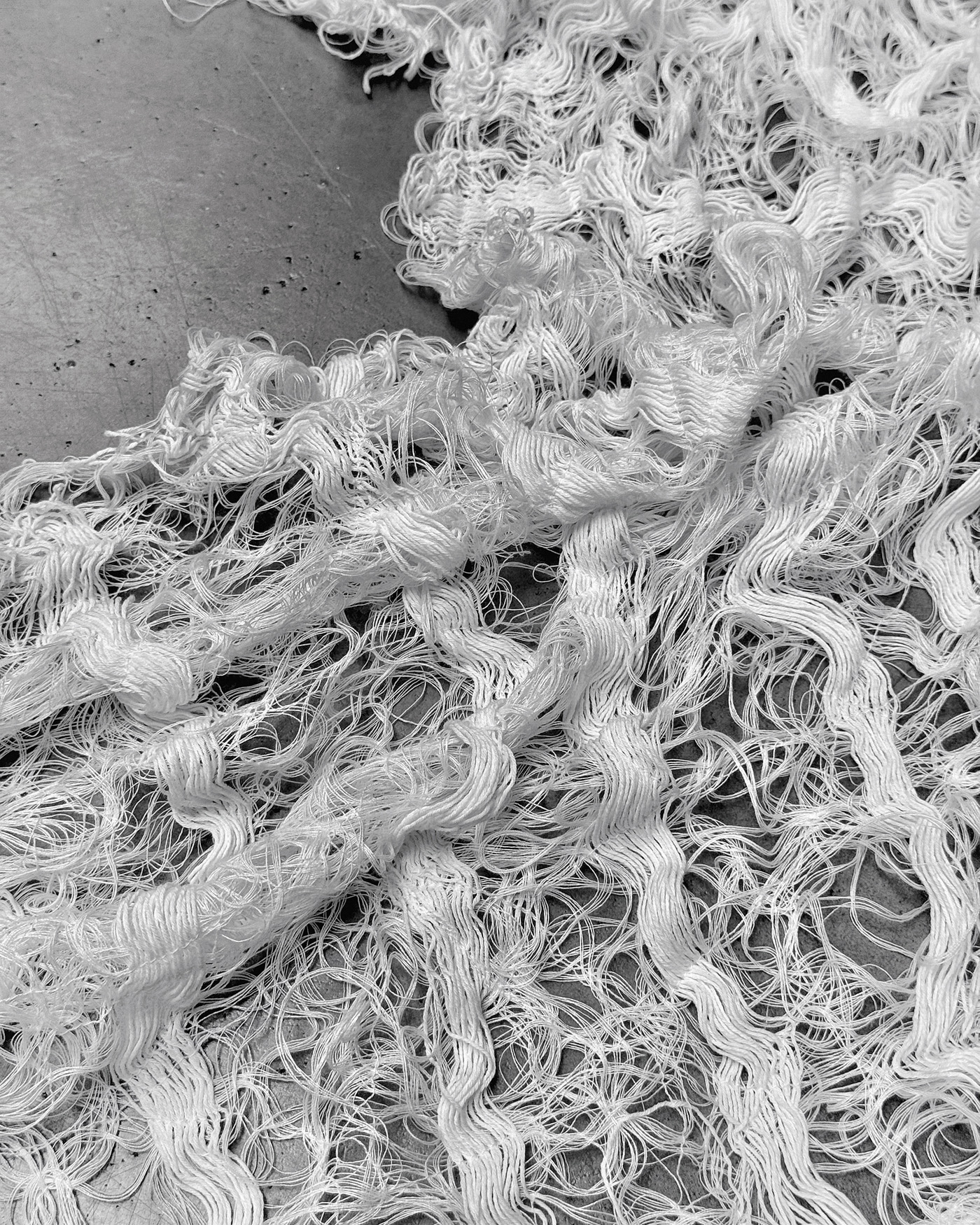
Beyond composition, treatments such as dyeing, washing, fabric manipulation, and molding are used to give each piece greater depth, character, and a more distinct artisan finish.
Beyond composition, treatments such as dyeing, washing, fabric manipulation, and molding are used to give each piece greater depth, character, and a more distinct artisan finish.

Internal ArchitectureInternal architecture is built around a fully in-house system, with sourcing, development, production, artisan techniques, quality control, delivery, and communication handled within one concentrated structure rather than divided across outside parties. This keeps the process precise, consistent, and closely controlled at every stage.
Working in this way allows every garment to be guided internally from its first material decisions to its final completion. This reduces unnecessary movement of fabrics and components, keeping the process direct and responsible.
Working in this way allows every garment to be guided internally from its first material decisions to its final completion. This reduces unnecessary movement of fabrics and components, keeping the process direct and responsible.